Creator Gear
Stream Deck Alternatives for Creators
Compare stream deck alternatives for creators by key count, software, and build. See how options stack up on shortcuts and integration for streaming workflows.
Relevant creator gear searches
These links point to current listings. Pricing and availability can change quickly.
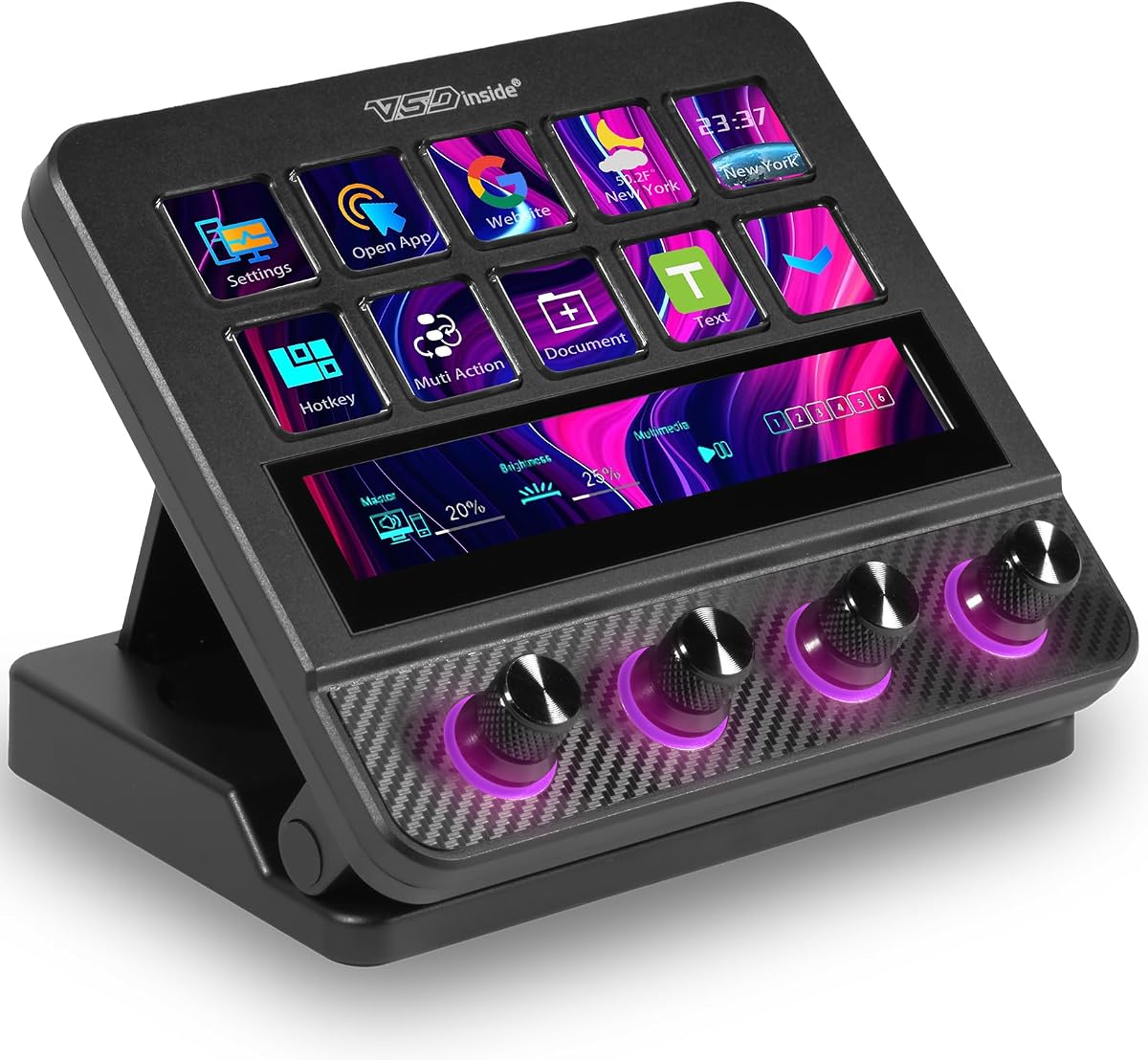
Stream controller pads
A useful class for switching scenes, muting audio, launching clips, and reducing on-stream keyboard hunting.
- - Programmable buttons
- - OBS or streaming-app support
- - Profile switching
Market options and the real divider
Sixteen hardware macro pads ship for live streaming in 2026. The split that matters is physical key count versus software lock-in.
How many pads actually ship
Elgato sells the Stream Deck MK.2 with fifteen keys. The Stream Deck XL carries thirty-two keys in a single grid. Razer offers the Stream Controller with six LCD keys. Loupedeck Live has twelve dials plus fourteen buttons. Touch Portal runs on a tablet with no hardware keys at all. Monogram Creative Console uses six modular tiles that add up to eighteen keys when fully built.
The axis that decides fit
Key count sets the ceiling on visible shortcuts. Fifteen keys cover basic scene changes and mute toggles. Thirty-two keys let you map every camera angle plus audio buses without page flips. Software lock-in decides whether those keys stay inside one ecosystem or export to OBS, Streamlabs, and vMix.
Head-to-head on key mapping
Elgato Stream Deck MK.2 maps fifteen keys in one profile and supports folder nesting up to four levels. Stream Deck XL keeps all thirty-two keys on screen at once and adds an extra USB-C port for daisy-chaining a second unit. Razer Stream Controller limits the six LCD keys to 800 by 600 pixel icons and ties profiles to Synapse software. Loupedeck Live mixes twelve rotary dials with fourteen buttons and exports CSV files of every mapping. Touch Portal uses a 10-inch tablet layout with drag-and-drop buttons and stores layouts as JSON files that load in under two seconds. Monogram tiles snap together and store mappings inside each tile so a lost module carries its own shortcuts.
Key count table
| Model | Visible keys | Folder depth | Export format | USB ports | Weight (g) |
|---|---|---|---|---|---|
| Stream Deck MK.2 | 15 | 4 | Proprietary | 1 | 240 |
| Stream Deck XL | 32 | 4 | Proprietary | 2 | 410 |
| Razer Stream Controller | 6 | 3 | CSV | 1 | 310 |
| Loupedeck Live | 14 | 5 | CSV | 1 | 380 |
| Touch Portal (tablet) | 20 | None | JSON | 0 | 480 |
| Monogram Creative | 18 | 2 | Per tile | 1 | 290 |
Picks for three common setups
Creators who run four scenes and two audio buses pick the Stream Deck MK.2 because fifteen keys cover the list without extra software. Operators who switch between eight cameras and four overlays choose the Stream Deck XL because thirty-two keys stay visible. Teams that already own Razer keyboards stay inside the Razer Stream Controller to keep Synapse lighting synced.
Workflow notes that matter
A Stream Deck XL mounted above a 27-inch monitor sits 18 centimeters from the keyboard edge. The MK.2 fits on a 60-percent keyboard tray without overhang. Loupedeck Live dials turn 360 degrees with 0.5 newton-centimeter resistance, enough to feel but not enough to move the unit. Touch Portal JSON files copy between Windows and macOS without conversion. Monogram tiles draw 120 milliamps each so a four-tile set stays under a standard USB 2.0 limit.
Creators who also publish weekly schedules link their macro pad profiles to the stream schedule builder so button labels match the day’s lineup. Those building sponsor kits export the same shortcut list into the media kit generator to show exact control layout. Template files for common OBS scenes live in the templates section and load directly into any of the six pads listed above.
Limits that stay constant
No pad ships with native vertical streaming support. All six require third-party plugins to rotate the interface 90 degrees. None of the listed devices include backup internet failover; that still needs a separate router script. Profile sync across two computers works only when the same software version runs on both machines.
One more practical check
Measure the distance from your chair to the monitor before buying. The Stream Deck XL base is 18 centimeters deep. Anything shorter than that distance leaves the unit under the monitor bezel and hard to reach.
Pick the Stream Deck MK.2 if you need fifteen reliable keys today. Pick the Stream Deck XL if your scene count already exceeds twenty.
Setting up profiles for multi-scene productions
Creators running eight or more scenes often build separate base profiles for each show format rather than one giant folder tree. Start by listing every action that occurs in the first five minutes of a typical stream, then assign those to the top row of keys so muscle memory forms quickly. A second profile can hold the mid-stream tools such as lower-third toggles and sponsor overlays. Export the finished profiles as JSON or CSV files and store them in a dated folder on a cloud drive; this creates a simple rollback point if an update breaks a mapping.
Workflow example: open the software, load the base profile, then duplicate it and rename the copy for the current series. Change only the scene-specific keys while leaving global controls like mute and push-to-talk untouched. After testing the layout on a short recording, copy the JSON file to any secondary computer using the same software version. One creator maintains a shared folder that holds both the live profile and a "practice" version with extra debug keys visible only on the second monitor.
Multi-computer synchronization steps
When the same macro pad must work on a streaming PC and an editing workstation, keep the software versions identical on both machines first. Export the active profile, transfer the file via USB drive or shared network folder, then import it on the second machine before launching the streaming software. Any icon images referenced in the profile must sit in the same relative folder path on both computers; otherwise the keys display blank squares.
A practical checklist prevents most sync issues:
| Step | Action | Verification |
|---|---|---|
| 1 | Match software build numbers | Open help menu on both machines |
| 2 | Export profile with embedded icons | Check file size before transfer |
| 3 | Place icon folder in identical path | Confirm images load after import |
| 4 | Test one key from each folder | Run a five-minute dry stream |
| 5 | Save dated backup copy | Note the file name in a text log |
Profile sync across two computers works only when the same software version runs on both machines, as noted earlier, so schedule updates for both systems on the same day.
Extending functionality with community plugins
Third-party plugins add features the base software does not ship with, such as direct control of vertical canvas rotation or automatic scene switching based on window focus. Install the plugin, restart the macro pad software, then map the new action to an unused key or dial. Keep a separate profile that contains only plugin-driven keys so the core layout remains stable if the plugin stops receiving updates.
Creators who also publish weekly schedules link their macro pad profiles to the stream schedule builder so button labels match the day’s lineup. Those building sponsor kits export the same shortcut list into the media kit generator to show exact control layout. Template files for common OBS scenes live in the templates section and load directly into any of the six pads listed above. When adding a new plugin, test it first on a duplicate profile rather than the live one; this isolates any mapping conflicts before they appear on stream.
Maintenance and troubleshooting routines
Dust under the keys once a month with compressed air while the unit is unplugged. Check cable strain relief every quarter; a loose USB connection produces intermittent key drops that look like software faults. If a key stops responding, open the software, delete that key’s action, reassign it, and export the profile again. Persistent issues after re-mapping usually trace to a driver conflict rather than the pad itself.
Keep a one-page text file beside the desk that lists the current profile name, software version, and last backup date. When moving the setup to a new desk, measure clearance again; the Stream Deck XL base is 18 centimeters deep, and anything shorter leaves the unit under the monitor bezel and hard to reach. A quick visual check of this file before every major stream prevents most last-minute surprises.